Process
A project begins with intention, not a catalogue.
VEIL approaches tattoo work as a sequence of listening, alignment, composition, and care. Each stage gives the idea enough structure to become specific to one body without rushing it into a ready-made motif.
The Brief
Consultation Studio helps organise the starting point: the purpose of the project, how its story should be shared, an approximate body-placement plan, a style direction, session preference, artist choice, and broad timing preferences. These choices support planning; they do not determine feasibility, price, or a date.
The current portfolio can save an optional demonstration brief in the present browser tab. It is not sent to the atelier and does not start a conversation, reserve a date, or create a real enquiry.
Artist Alignment
You may follow the portfolio recommendation, name a specific artist, or leave the decision for a future atelier conversation. The rules-based recommendation uses only selected details such as direction, purpose, body region, scale, flow, and session preference; it never reads the written story.
The recommendation is a preliminary starting point, not an assignment or acceptance of the project. Nobody receives or reviews the current brief. In a real consultation, a person might find that another artist is better suited to the anatomy, technical limits, or direction of the work.
Private Consultation
A meaningful consultation would be a conversation about why the work matters, how it should occupy the body, and how much visual presence feels right. Existing tattoos, movement, scale, composition, technical limits, and a realistic pace of work all belong in that discussion.
This website demonstrates the structure of that conversation but does not schedule or conduct it. No artist, consultation format, date, or response from VEIL is confirmed here.
Design and Refinement
VEIL does not treat the portfolio as a catalogue for duplication. References can identify atmosphere, rhythm, contrast, or a practice that resonates, while the final direction must respond to the individual wearer and cannot be a copy of an existing tattoo.
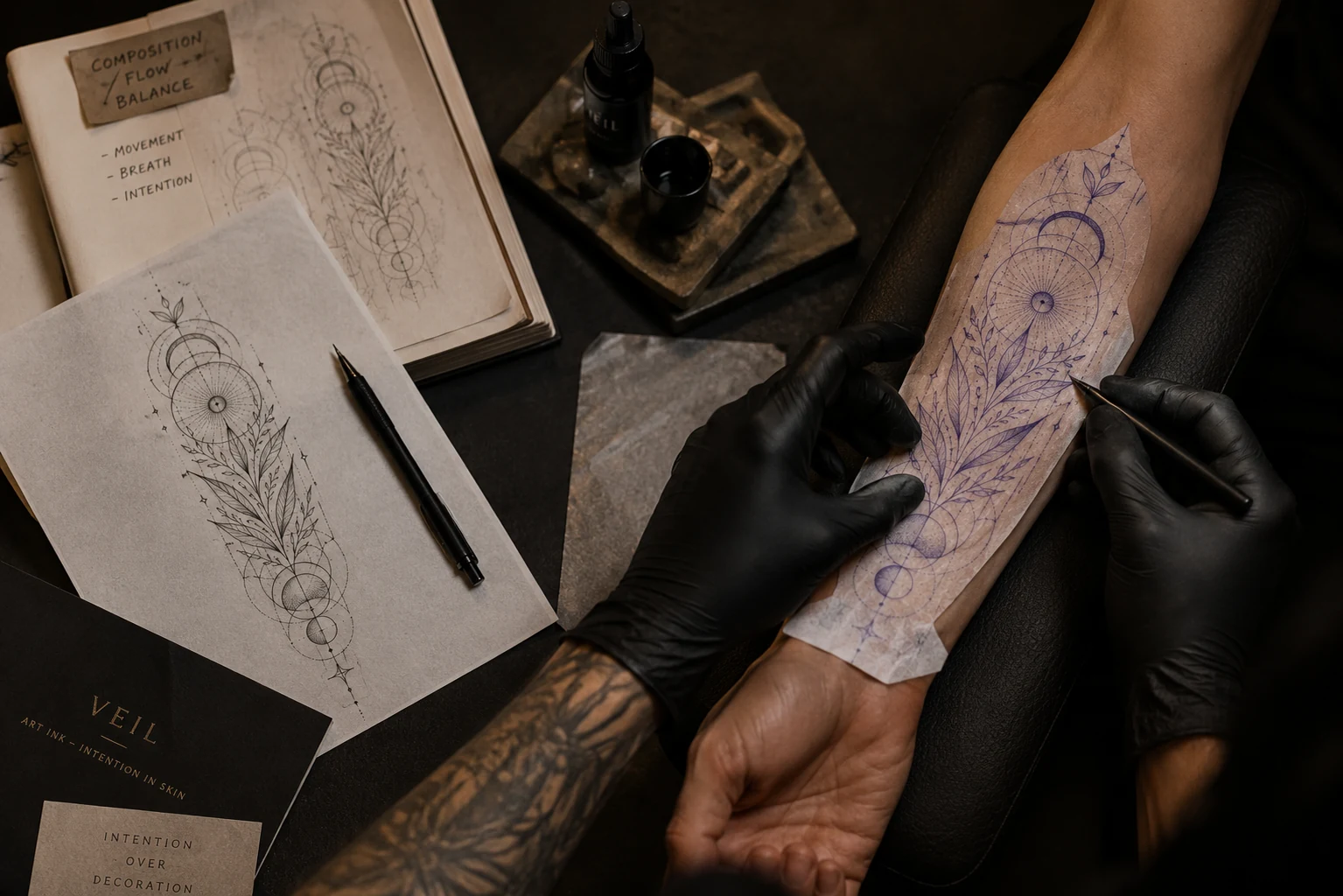
Anatomy and movement guide the composition. Layered sketches, tracing sheets, temporary transfer studies, and working annotations help test composition and balance; they are design tools rather than formal client records. Detail is controlled for clarity at the intended scale, and larger ideas may be planned as coherent stages.
The Session
A session begins with calm preparation and a live confirmation of placement. Final scale and orientation are checked against the actual body before work begins, because an abstract plan or screen preview cannot make that decision.
The work follows the agreed direction at an individual pace, with space for breaks and reassessment. VEIL does not promise a universal duration, a fixed number of sessions, or a pain-free experience.
Healing and Continuity
After a session, guidance should be specific to the completed work and the person receiving it. The healing process is observed without forcing it into one universal timetable, and the composition is assessed properly only after the skin has settled.
That later view can inform a check-in, a refinement, or the next stage of a larger project. General preparation and healing principles are available in the dedicated guide, while individual instructions always take priority.
Read Healing and PreparationBegin thoughtfully
Shape a starting point before the first conversation.
Consultation Studio can save a demonstration brief in this browser tab. Nothing is sent to VEIL, no booking is made, and the atelier does not receive it.
Open Consultation Studio