Project study · VEIL / 003
Botanical Memory
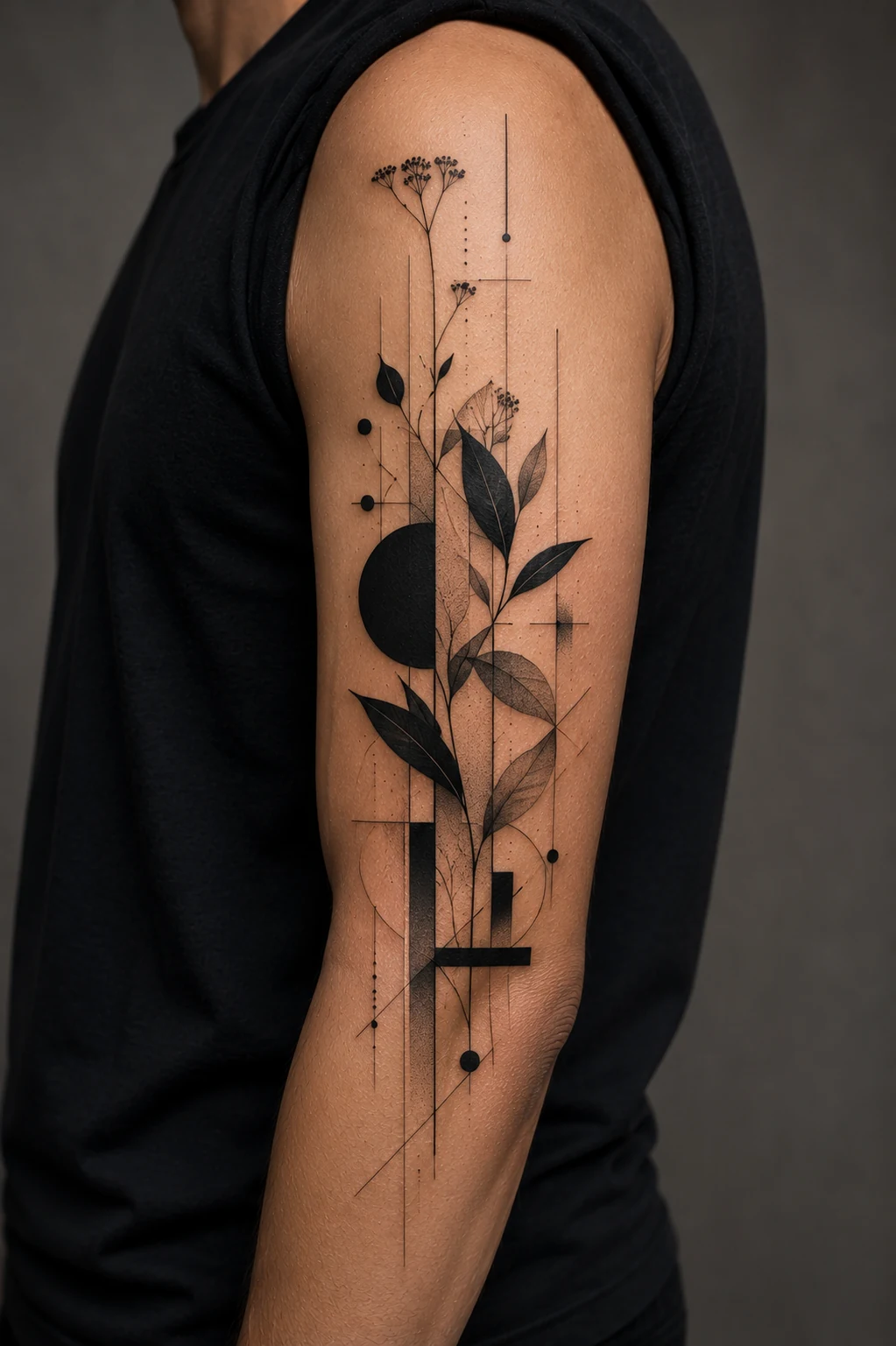
Botanical Memory combines a recognisable plant language with circles, fine construction lines, and carefully balanced black fields. The large upper-arm piece first reads as one vertical composition, then reveals uneven leaves and private marks at closer range.
- Placement
- Upper arm
- Scale
- Large
- Session profile
- Planned across sessions
Project index
The work in context.
A botanical upper-arm composition places memory among uneven leaves, geometry, and a dark circular centre.
Botanical fragments, precise lines, and a black circular field form a vertical memory map from shoulder to elbow.
- Artist
- Mira Sol
- Discipline
- Botanical
- Placement
- Upper arm
- Body orientation
- Outer
- Scale
- Large
- Session profile
- Planned across sessions
01 · Client brief
What the work needed to hold.
The wearer brought the memory of a meaningful plant, not a request for its exact portrait. The piece needed to occupy the outer upper arm with confidence, preserve coded symbolism, and balance organic growth with a more ordered geometric frame.
02 · Creative tension
The question inside the design.
The plant needed to remain recognisable without becoming a specimen, while the geometry had to organise the work without making it clinical. Uneven botanical density and one dark circular field create tension between memory, order, and omission.
03 · Anatomy and movement
Composed with the body, not over it.
The main route follows the outer upper arm from the shoulder towards the elbow. Branches cross the changing curve at unequal intervals, while the dark circle provides a stable visual centre as the arm turns.
04 · Composition development
Four decisions toward one structure.
The source was reduced to a few leaf shapes and a continuous stem gesture. A geometric scaffold, circular field, and small archival marks were then introduced to hold the plant fragments together without explaining their private meaning.
Composition stage 01
Remnant
Recognisable gestures of the meaningful plant are isolated without attempting to reproduce a complete specimen.
Composition stage 02
Code
Leaves and nodes become a restrained notation in which selected details carry private symbolic weight.
Composition stage 03
Turn
Asymmetric branches cross the upper-arm curve so the balance changes between front, side, and a slight turn.
Composition stage 04
Keeping
Botanical and ornamental elements settle into one intimate composition that suggests its source without explaining it.
05 · Technical approach
How the visual system is protected.
Leaf rhythm
Unequal intervals keep the botanical fragments distinct as they travel across the upper arm's curved surface.
Symbolic hierarchy
Only a few coded marks receive emphasis, protecting their significance and preventing decorative noise.
Arm rotation
The stem, circle, and branches are reviewed with the arm resting and turning so the composition remains coherent without forced symmetry.
06 · Session path
A plan responsive to the work.
The large shoulder-to-elbow composition is planned across coherent botanical and geometric passages. Each return can preserve the long vertical route while allowing linework, dark fields, and finer leaves to settle before the next section is confirmed.
07 · Healing perspective
Care remains individual.
Recovery planning considers sleeve friction and the movement of the upper arm. Individual aftercare and activity guidance is confirmed for the actual area completed during each session.
Read healing and preparation guidance08 · Artist reflection
What remains in the finished work.
A memory does not need an exact likeness to remain specific. Here, the most personal information lives in the distance between marks and in the few details that the wearer alone can fully name.
Closing perspective
A direction for a new conversation.
Botanical Memory keeps nature present as rhythm, symbol, and structured absence—recognisable, but never reduced to an illustration.
Add this study as context for your consultation. It will help describe a sensibility while your own work is developed for your body and story.
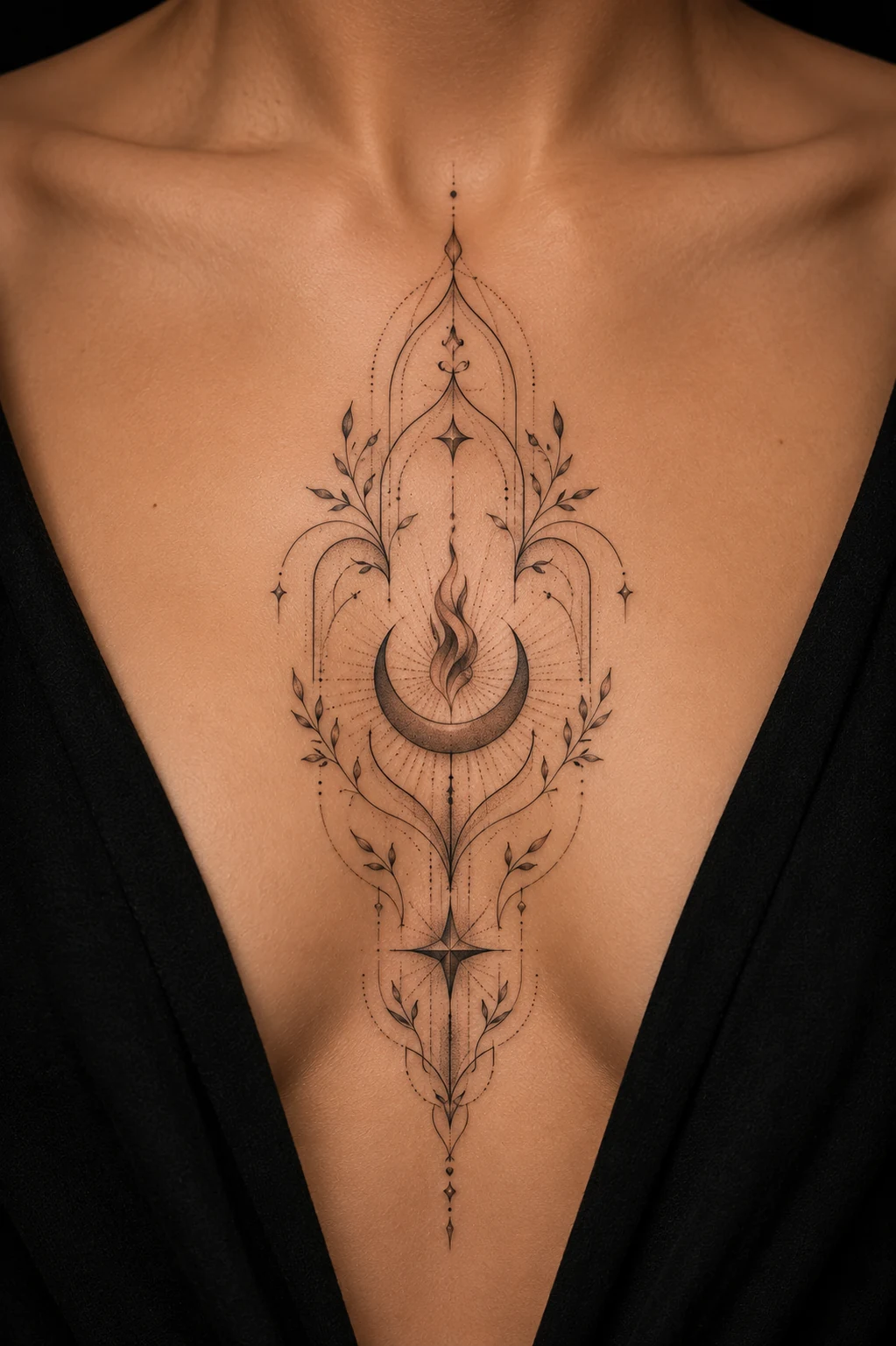
Votive
- Artist
- Mira Sol
- Discipline
- Ornamental
- Placement
- Sternum
- Scale
- Medium
- Session profile
- Extended single-session direction
A private symbol anchors an axial ornament composed specifically for the sternum.
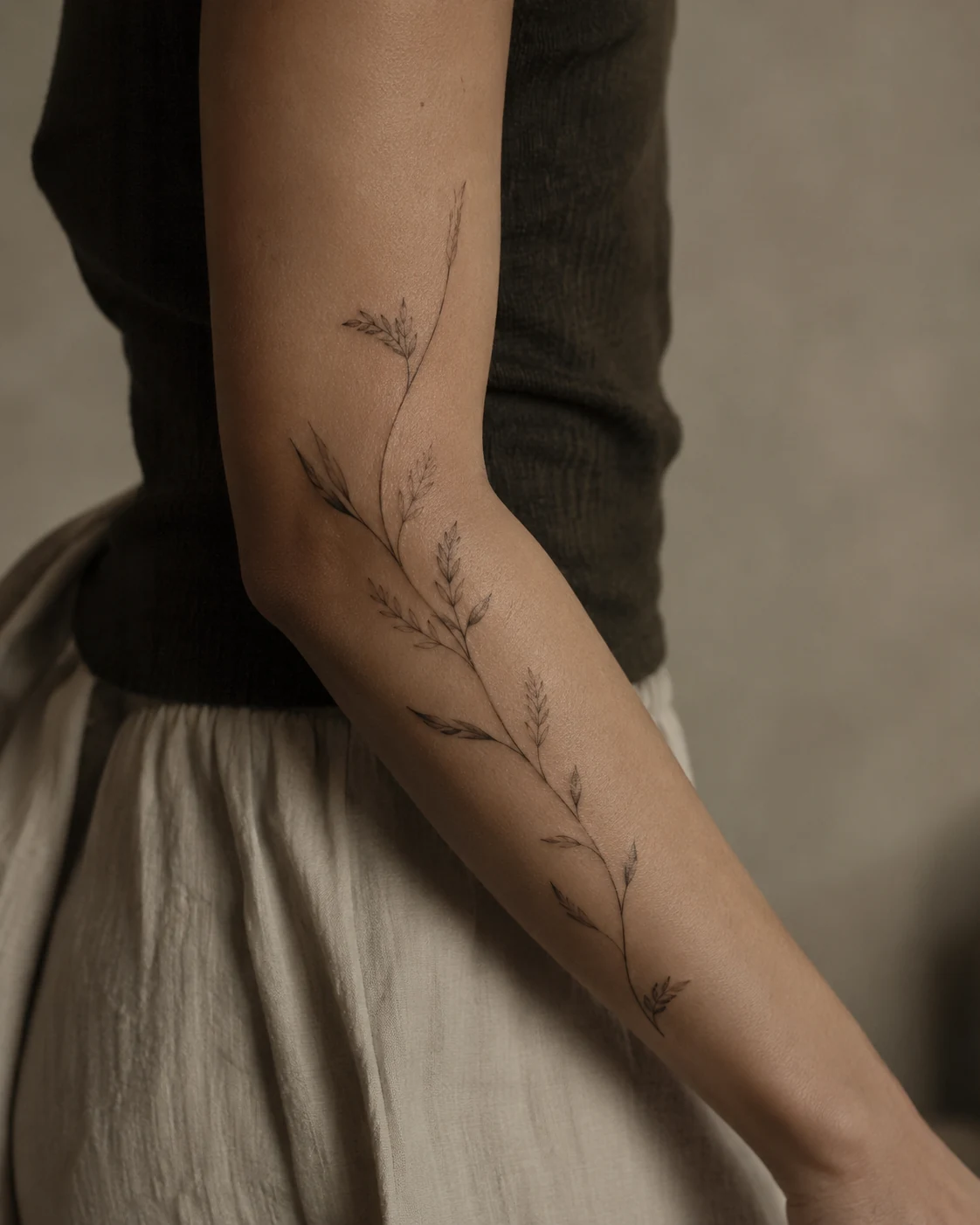
Wild Stem No. 12
- Artist
- Elara Voss
- Discipline
- Botanical
- Placement
- Forearm
- Scale
- Medium
- Session profile
- Single-session direction
An organic fine-line stem travels along the forearm without reproducing a botanical plate.
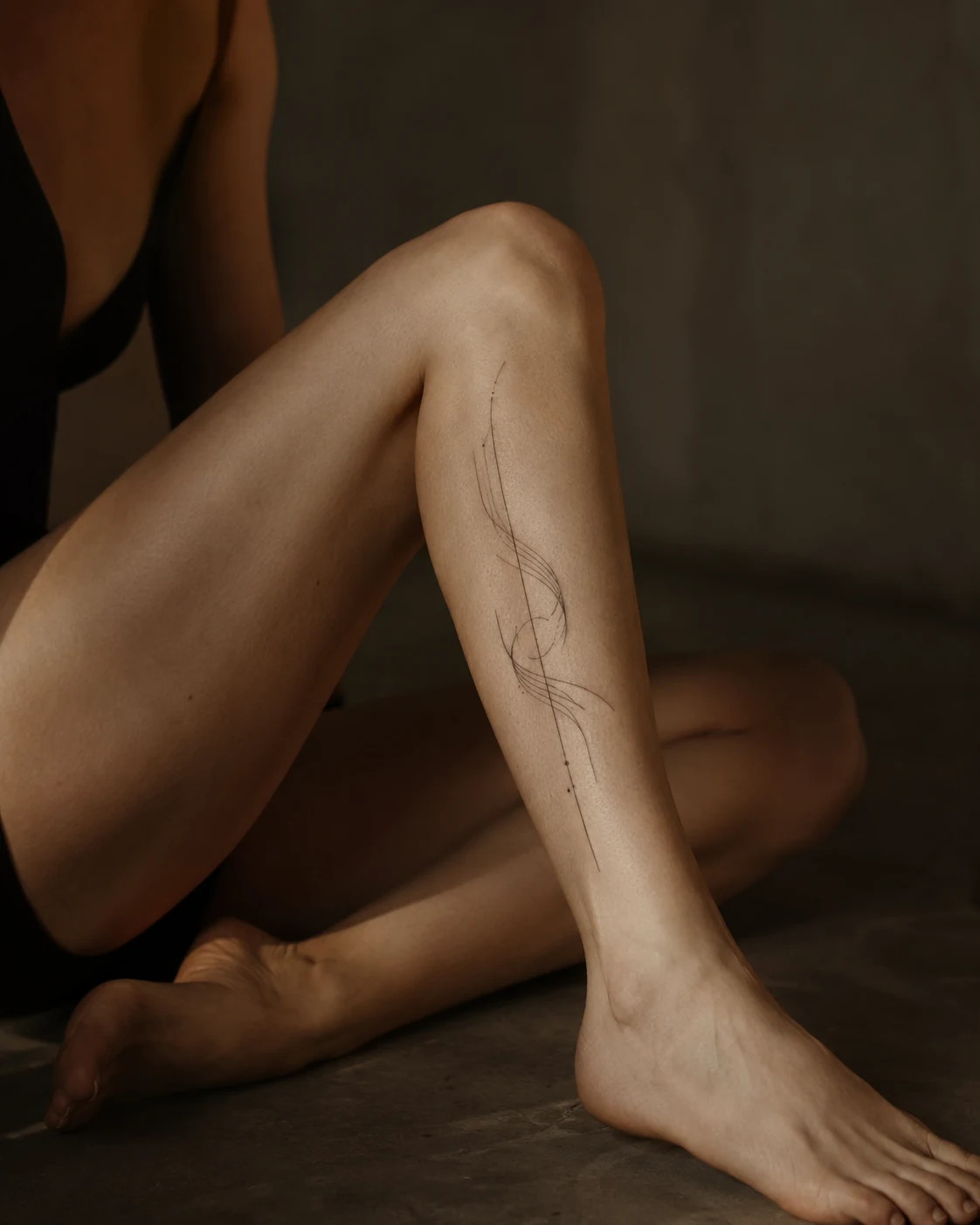
Kept in Motion
- Artist
- Elara Voss
- Discipline
- Fine Line
- Placement
- Calf
- Scale
- Medium
- Session profile
- Single-session direction
A restrained abstract rhythm changes its reading as the lower leg rests, flexes, and moves through a step.