Project study · VEIL / 007
Votive
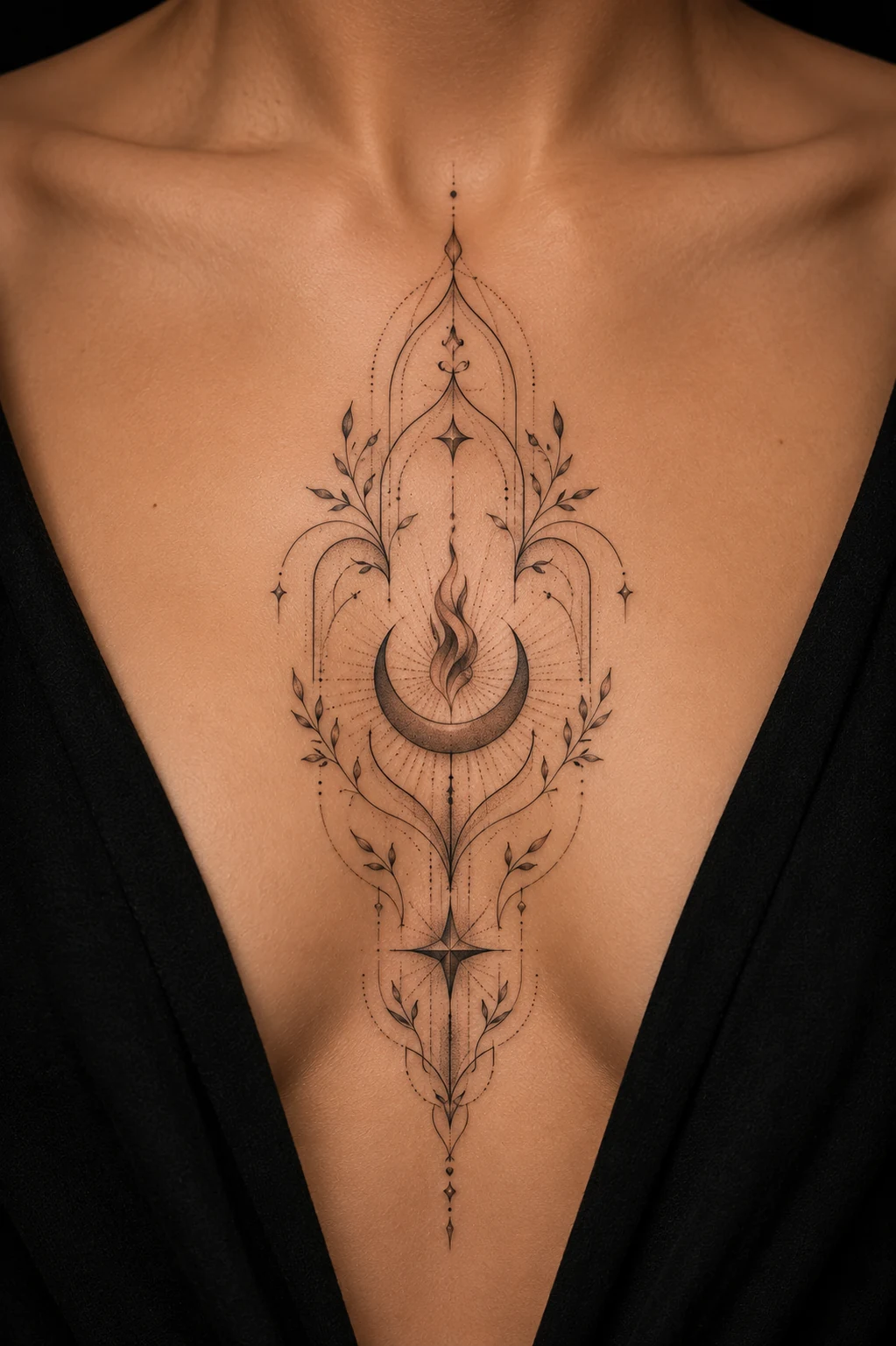
Votive organises a private central sign along the sternum. Its symmetry is visual rather than mathematical: paired arcs and intervals respond to posture, breath, and the small differences of a living chest.
- Placement
- Sternum
- Scale
- Medium
- Session profile
- Extended single-session direction
Project index
The work in context.
A private symbol anchors an axial ornament composed specifically for the sternum.
An axial ornament places a personal symbol at the centre of the sternum.
- Artist
- Mira Sol
- Discipline
- Ornamental
- Placement
- Sternum
- Body orientation
- Central
- Scale
- Medium
- Session profile
- Extended single-session direction
01 · Client brief
What the work needed to hold.
The wearer wanted an intimate ornamental piece centred on a personal symbol, kept private rather than displayed as a public emblem. The composition needed a clear sternum axis, carefully proportioned arcs, and a balance that still felt human.
02 · Creative tension
The question inside the design.
A central ornament can become mechanically perfect and detached from the body. Here the challenge was to keep the authority of an axis while allowing paired forms to adjust independently. Visual balance matters more than mirrored coordinates.
03 · Anatomy and movement
Composed with the body, not over it.
Alignment is established on the standing body in a natural posture, then reviewed through calm breathing. The central sign follows the sternum while surrounding arcs open where the surface changes, allowing the composition to remain centred without forcing the body into symmetry.
04 · Composition development
Four decisions toward one structure.
The private symbol was first protected as the visual centre. Axial guides, paired arcs, and breathing intervals were then built around it, with each side adjusted by eye on the standing body rather than copied from a perfect half.
Composition stage 01
Centre
The personal sign is isolated as the meaning-bearing point before ornament is introduced.
Composition stage 02
Axis
A vertical guide and paired arcs organise the symbol without turning it into a rigid template.
Composition stage 03
Breath
Intervals and arc reach are adjusted through posture and breathing so both sides remain visually balanced.
Composition stage 04
Keeping
The final ornament protects the central sign through carefully judged spacing rather than decorative excess.
05 · Technical approach
How the visual system is protected.
Standing alignment
The principal axis is confirmed in natural standing posture because a flat template cannot account for the body’s centre.
Visual symmetry
Paired elements are balanced by perception and anatomy, not forced into mathematically identical halves.
Ornamental spacing
Fine intervals open where the surface compresses or changes, preserving clarity around the central symbol.
06 · Session path
A plan responsive to the work.
The medium sternum composition is prepared as an extended single session, with placement confirmed on the standing body before work begins. The session plan is discussed clearly and remains responsive to the wearer throughout.
07 · Healing perspective
Care remains individual.
Because the placement can meet clothing and pressure, practical recovery planning may include temporary adjustments discussed with the artist. Individual dressing and aftercare guidance takes priority over generic advice.
Read healing and preparation guidance08 · Artist reflection
What remains in the finished work.
The axis gives the work ceremony, but the small differences between its two sides give it life. The body is not corrected into symmetry; the ornament learns how to balance on the body that is present.
Closing perspective
A direction for a new conversation.
Votive keeps its meaning at the centre while balanced ornament, posture, and breath form a protective frame around it.
Add this study as context for your consultation. It will help describe a sensibility while your own work is developed for your body and story.
Botanical Memory
- Artist
- Mira Sol
- Discipline
- Botanical
- Placement
- Upper arm
- Scale
- Large
- Session profile
- Planned across sessions
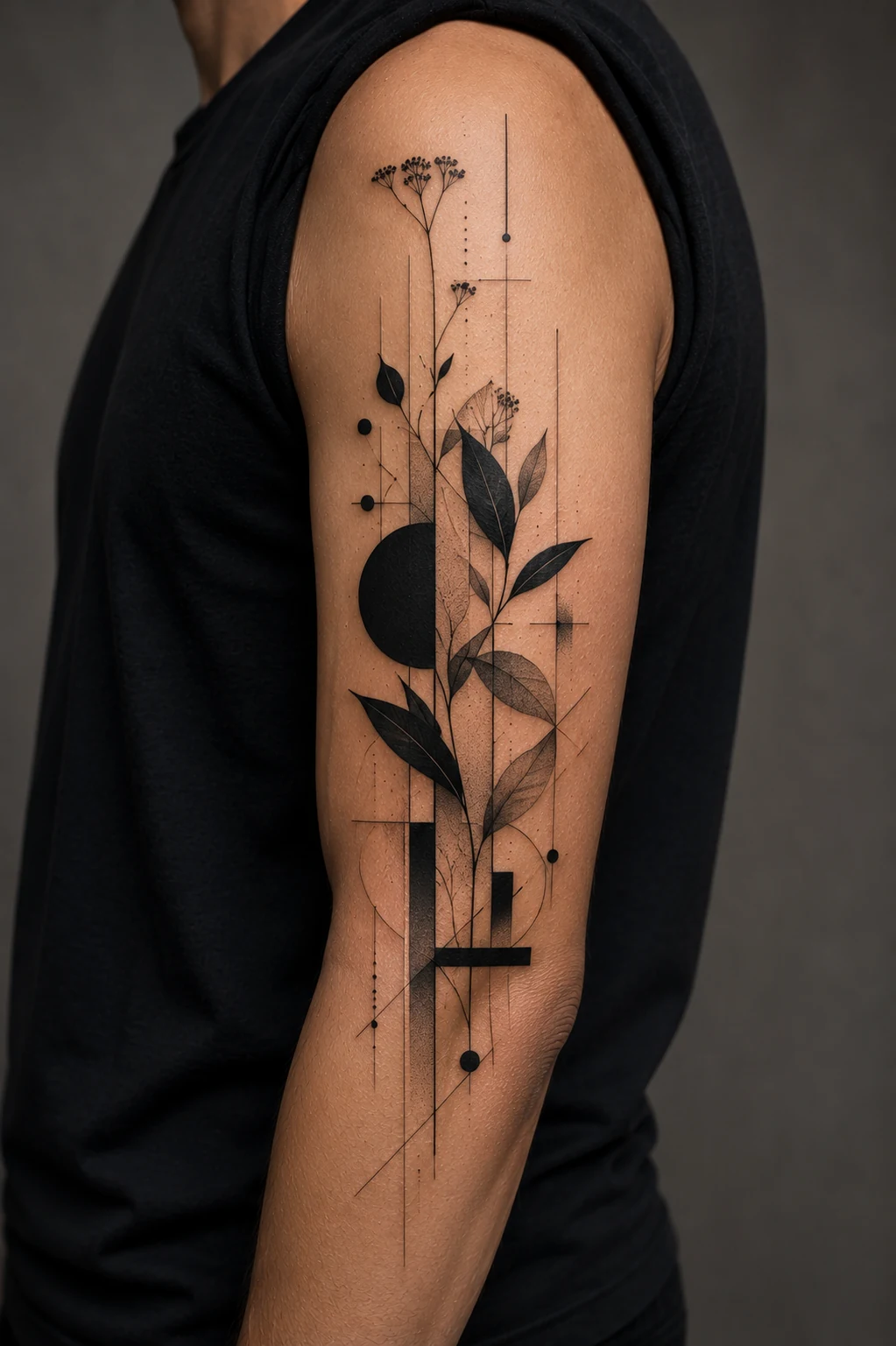
A botanical upper-arm composition places memory among uneven leaves, geometry, and a dark circular centre.
Wild Stem No. 12
- Artist
- Elara Voss
- Discipline
- Botanical
- Placement
- Forearm
- Scale
- Medium
- Session profile
- Single-session direction
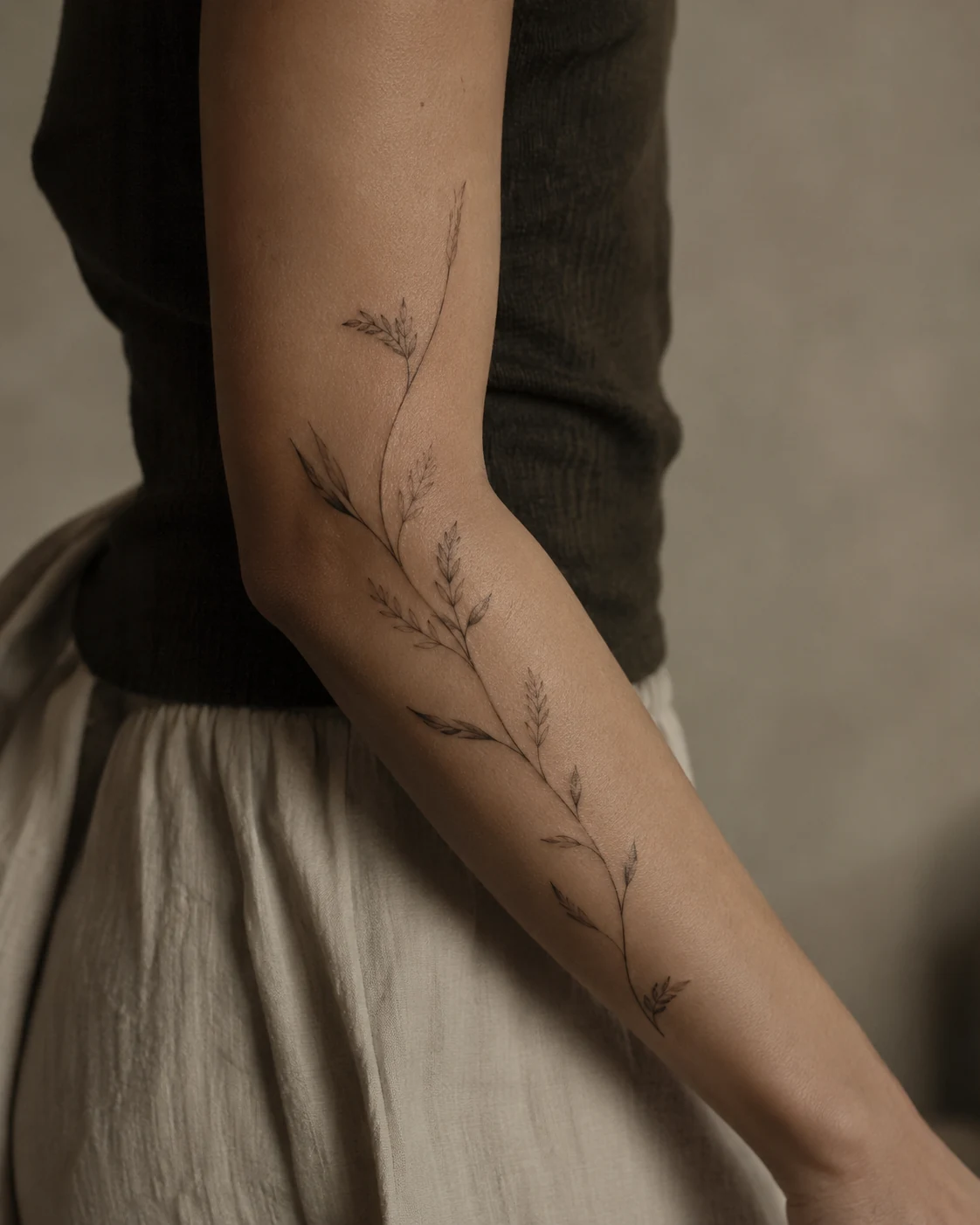
An organic fine-line stem travels along the forearm without reproducing a botanical plate.
Kept in Motion
- Artist
- Elara Voss
- Discipline
- Fine Line
- Placement
- Calf
- Scale
- Medium
- Session profile
- Single-session direction
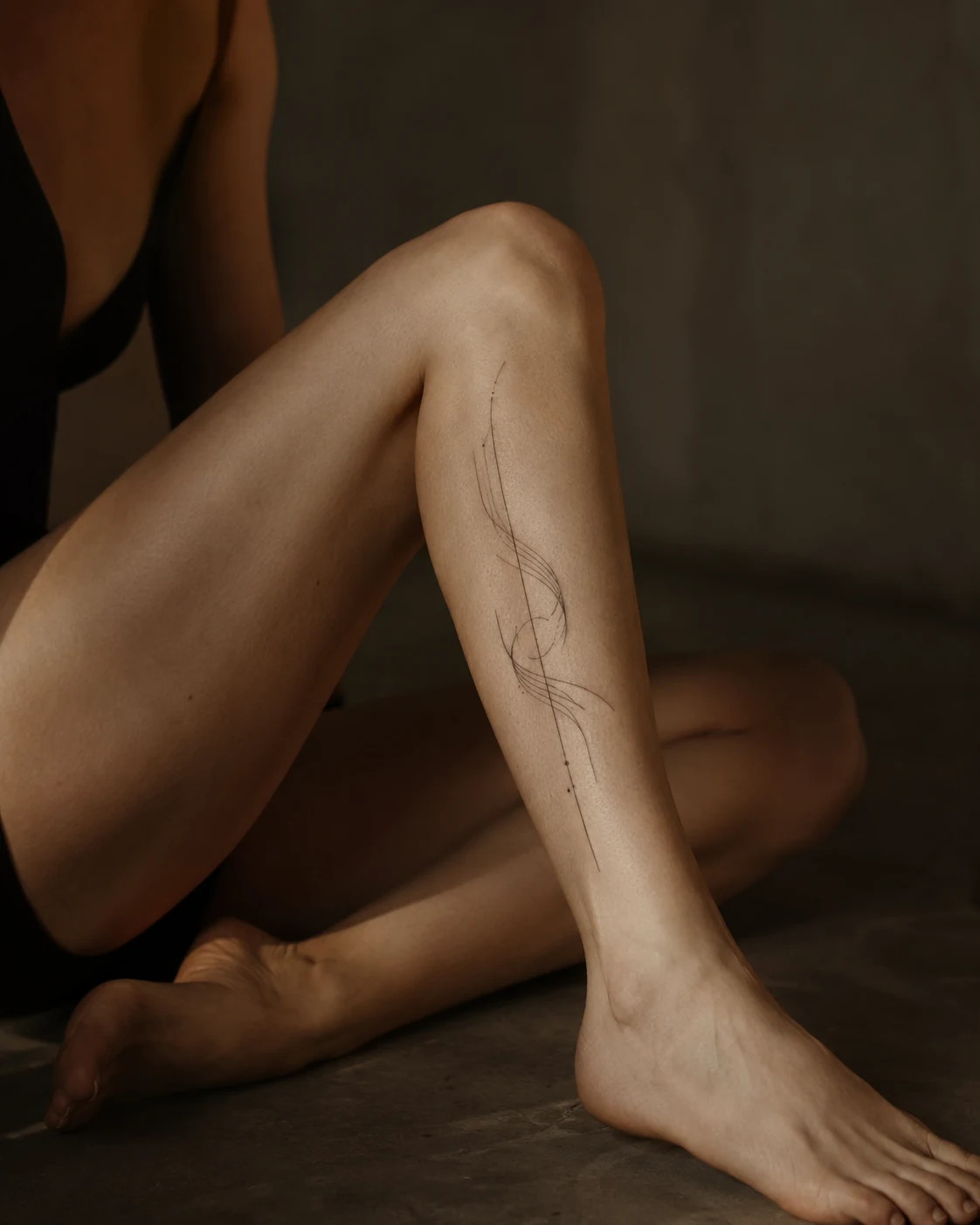
A restrained abstract rhythm changes its reading as the lower leg rests, flexes, and moves through a step.