Project study · VEIL / 002
Kept in Motion
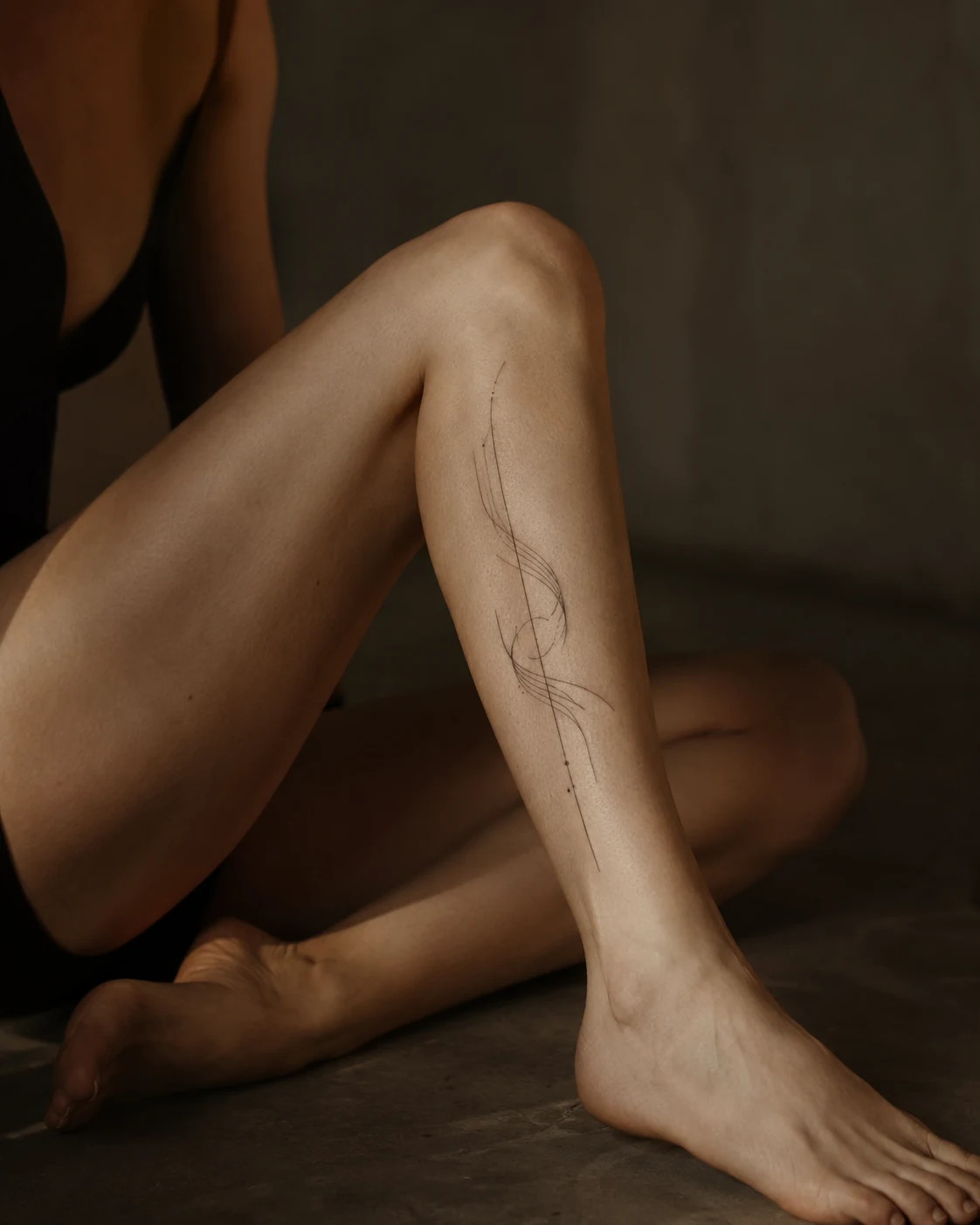
Kept in Motion records change through a family of fine lines and the air between them. The vertical drawing runs along the anterolateral calf, reading as a quiet trace at rest and opening into a more active rhythm through a step.
- Placement
- Calf
- Scale
- Medium
- Session profile
- Single-session direction
Project index
The work in context.
A restrained abstract rhythm changes its reading as the lower leg rests, flexes, and moves through a step.
Overlapping fine lines travel down the anterolateral calf, changing their spacing between the knee and ankle.
- Artist
- Elara Voss
- Discipline
- Fine Line
- Placement
- Calf
- Body orientation
- Outer
- Scale
- Medium
- Session profile
- Single-session direction
01 · Client brief
What the work needed to hold.
The brief asked for an abstract record of transition without a literal emblem. It needed to remain delicate, occupy the long lower-leg axis with confidence, stop cleanly before the ankle, and leave a possible route for a future extension without requiring one.
02 · Creative tension
The question inside the design.
The challenge was to preserve delicacy across a moving muscle without making the drawing look fragile. Too little separation would merge the overlapping lines; too much would break their shared rhythm. Readability therefore comes from carefully judged spacing rather than added weight.
03 · Anatomy and movement
Composed with the body, not over it.
The route follows the calf's long axis while staying clear of the knee crease and resolving before the ankle. Spacing is checked with the leg relaxed, the calf engaged, and the knee bent so crossings remain distinct through ordinary standing and walking movement.
04 · Composition development
Four decisions toward one structure.
Development focused on reducing a loose movement study to a few related paths. Lines approach, overlap, separate, and return around one central loop, while quieter vertical extensions establish direction and protect room beyond the current endpoints.
Composition stage 01
Trace
A loose vertical gesture establishes the emotional direction from below the knee toward the ankle.
Composition stage 02
Interval
Related paths separate into clear approaches, crossings, and returns, with uninked skin preserving light between them.
Composition stage 03
Stride
Curves are tuned to the change between a relaxed calf, a bent knee, and the tension created through a step.
Composition stage 04
Release
The lower lines taper before the ankle, completing the present piece without sealing off a possible future direction.
05 · Technical approach
How the visual system is protected.
Line hierarchy
Subtle changes in line presence separate the primary curve from quieter vertical traces without making the drawing heavy.
Interval control
Crossings receive enough air to remain distinct while the calf changes shape under natural muscle tension.
Extension boundary
Both vertical ends resolve softly, avoiding a decorative cap that would force any later continuation to copy this work.
06 · Session path
A plan responsive to the work.
The medium fine-line composition is prepared for one session. Its full route is confirmed on the standing and bent leg before work begins, with enough time to check distance from the knee crease, ankle, and each close crossing.
07 · Healing perspective
Care remains individual.
Lower-leg recovery planning considers trouser, sock, and footwear contact as well as everyday walking. Individual aftercare guidance takes priority over any general schedule.
Read healing and preparation guidance08 · Artist reflection
What remains in the finished work.
Its strength does not come from thinness alone. The spacing remains clear when the calf flexes, and the final line stops before the ankle without suggesting that the story is closed.
Closing perspective
A direction for a new conversation.
Kept in Motion is complete at rest and newly legible in every step: a quiet lower-leg structure with room for another future direction.
Add this study as context for your consultation. It will help describe a sensibility while your own work is developed for your body and story.
Wild Stem No. 12
- Artist
- Elara Voss
- Discipline
- Botanical
- Placement
- Forearm
- Scale
- Medium
- Session profile
- Single-session direction
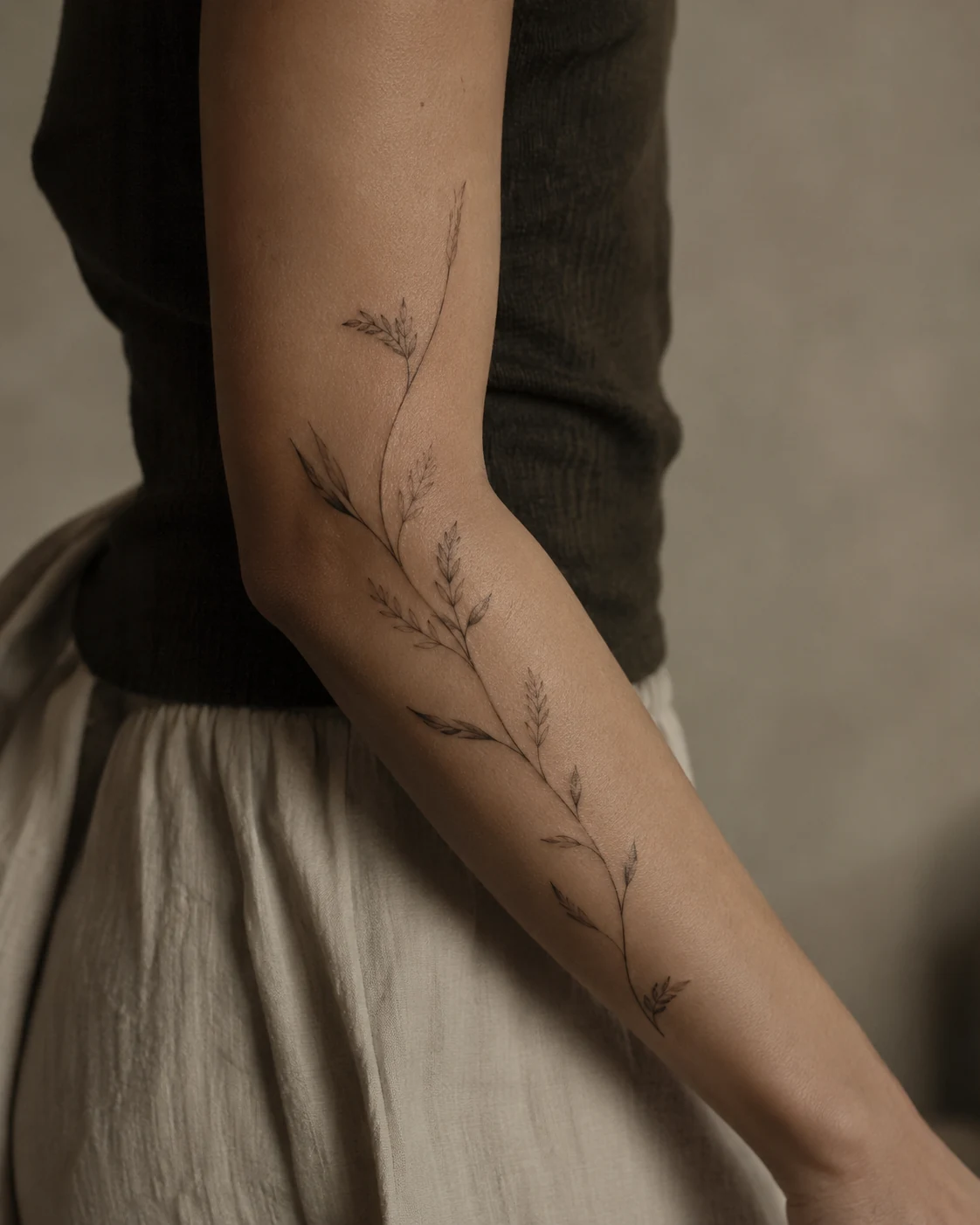
An organic fine-line stem travels along the forearm without reproducing a botanical plate.
Botanical Memory
- Artist
- Mira Sol
- Discipline
- Botanical
- Placement
- Upper arm
- Scale
- Large
- Session profile
- Planned across sessions
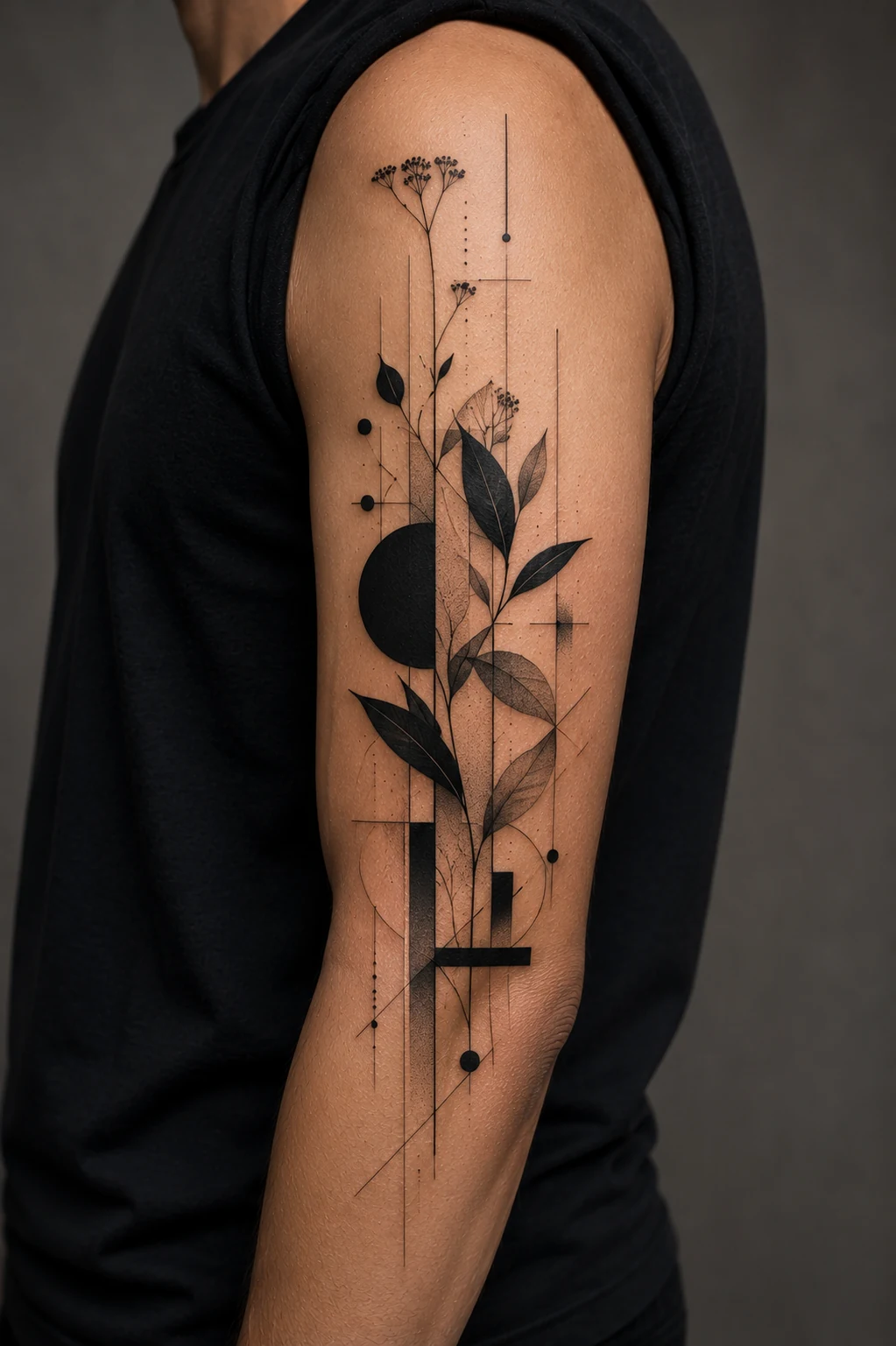
A botanical upper-arm composition places memory among uneven leaves, geometry, and a dark circular centre.
Votive
- Artist
- Mira Sol
- Discipline
- Ornamental
- Placement
- Sternum
- Scale
- Medium
- Session profile
- Extended single-session direction
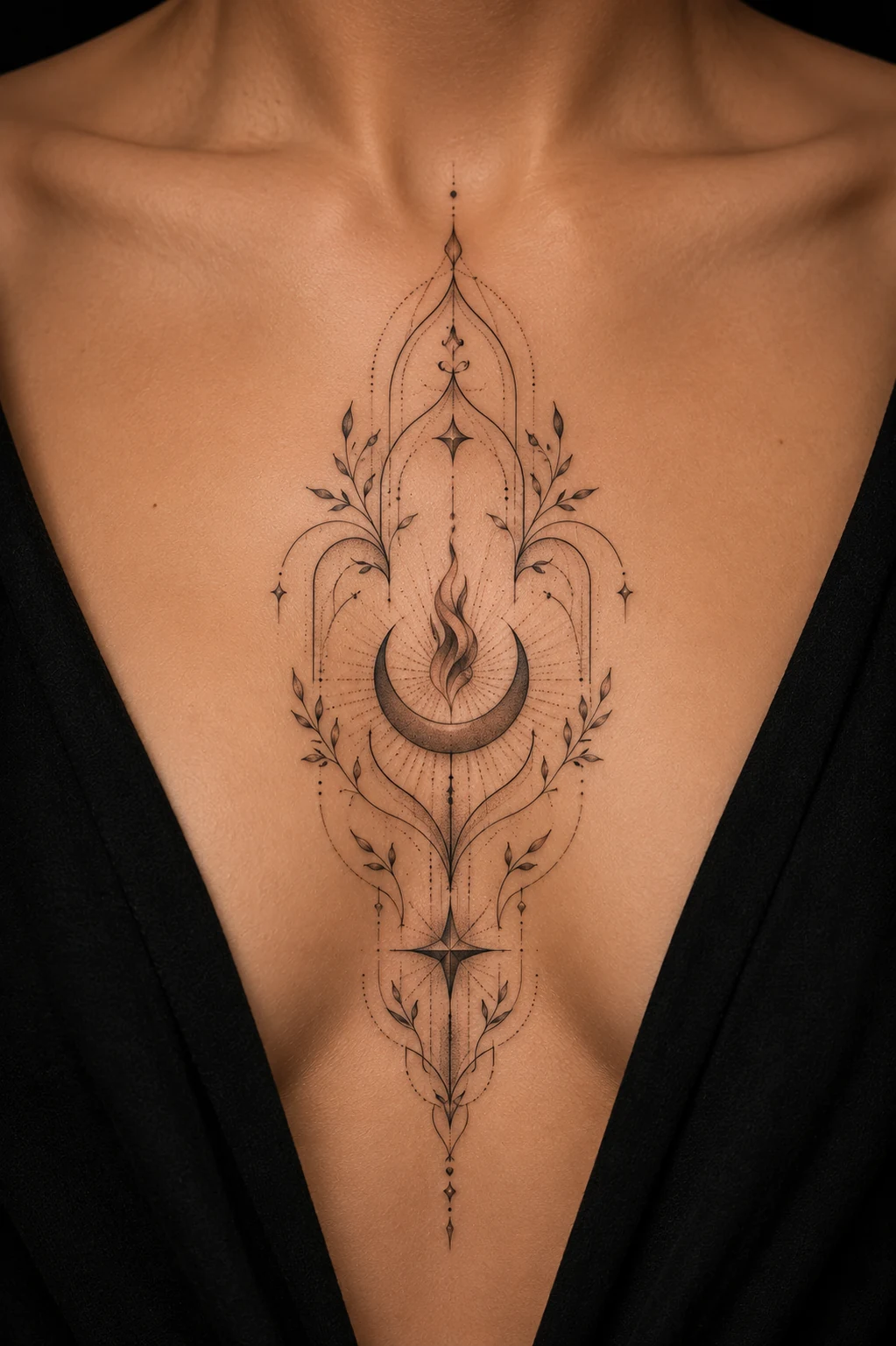
A private symbol anchors an axial ornament composed specifically for the sternum.