Project study · VEIL / 008
Second Skin
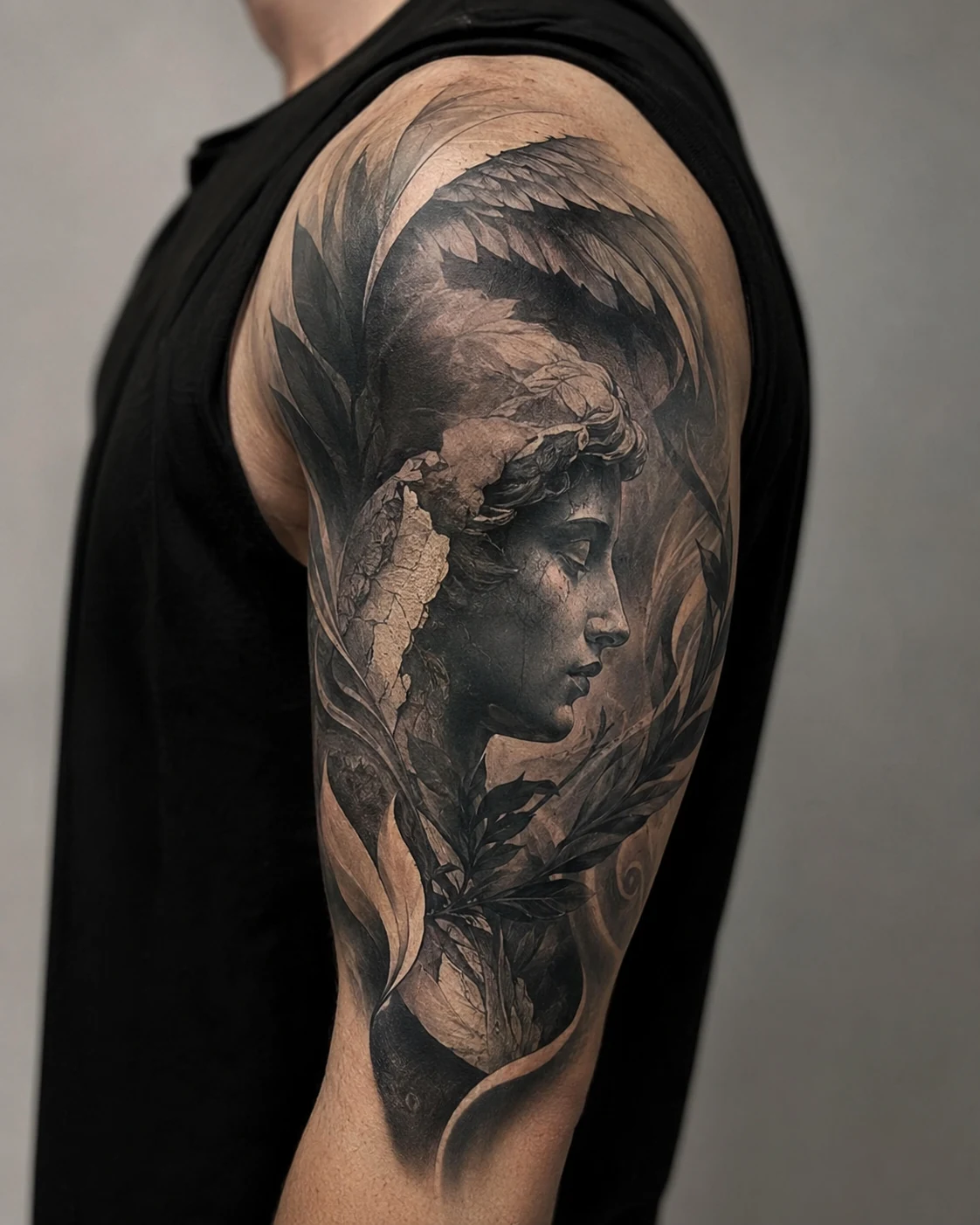
Second Skin explores the threshold between a living body and an image of weathered stone. A classical profile appears through a wing, leaves, and fractured surfaces, with soft black-and-grey transitions binding the separate elements into one upper-arm composition.
- Placement
- Upper arm
- Scale
- Large
- Session profile
- Planned across sessions
Project index
The work in context.
A classical stone profile emerges through a wing, leaves, and broken sculptural layers in soft black and grey.
A cracked classical profile, wing, and leaves form a layered black-and-grey study across the outer upper arm and shoulder.
- Artist
- Adrian Roe
- Discipline
- Illustrative
- Placement
- Upper arm
- Body orientation
- Outer
- Scale
- Large
- Session profile
- Planned across sessions
01 · Client brief
What the work needed to hold.
The brief asked for a large black-and-grey piece about protection, vulnerability, and the feeling of form beneath a surface. The work needed a recognisable classical anchor, organic supporting elements, and enough fracture to avoid a polished or monumental portrait.
02 · Creative tension
The question inside the design.
The portrait carries precise features, while the wing, leaves, and cracks ask for looser rhythm. If every passage received equal detail, the image would become crowded; if the surrounding layers were too quiet, the profile would feel detached from the arm.
03 · Anatomy and movement
Composed with the body, not over it.
The stone profile occupies the most stable outer-arm plane. Feather and leaf rhythms travel into the shoulder curve, while fractured edges and lighter transitions move around the side so the composition changes without losing its central face.
04 · Composition development
Four decisions toward one structure.
Development began with the profile and its line of sight. The wing established a protective diagonal, leaves created a second organic cadence, and cracks became compositional seams joining stone, shadow, and uninked skin rather than traces of another image.
Composition stage 01
Figure
A classical profile establishes the emotional anchor and the direction of the composition.
Composition stage 02
Shelter
The wing and leaves form protective layers around the face without closing it inside a frame.
Composition stage 03
Transition
Soft shadow and broken stone edges bridge the detailed centre into lighter passages around the upper arm.
Composition stage 04
Surface
Portrait, feather, leaf, crack, and uninked skin resolve as one layered surface across the shoulder and upper arm.
05 · Technical approach
How the visual system is protected.
Portrait hierarchy
Facial features receive the clearest tonal resolution, while supporting forms remain softer and more fragmentary.
Layered transitions
Feather, leaf, and cracked-stone edges overlap at different depths so no single outline flattens the upper-arm curve.
Black-and-grey balance
Dense accents are reserved for selected seams and shadows, leaving tonal space around the face and organic forms.
06 · Session path
A plan responsive to the work.
The large composition is planned across coherent passages: portrait, wing and leaves, then connecting stone and shadow. Each stage remains visually complete enough to review after settling before the next layer is confirmed.
07 · Healing perspective
Care remains individual.
Large tonal passages may settle at different tempos. Recovery planning considers shoulder movement and sleeve friction, and the relationship between portrait detail and softer surrounding layers is judged only after the skin has calmed.
Read healing and preparation guidance08 · Artist reflection
What remains in the finished work.
The profile becomes more vulnerable, not less, when its stone surface is allowed to crack. The wing and leaves do not explain that figure; they give it a layered environment that changes with the arm.
Closing perspective
A direction for a new conversation.
Second Skin brings body, stone, feather, and leaf together in one black-and-grey surface whose meaning remains open between protection and exposure.
Add this study as context for your consultation. It will help describe a sensibility while your own work is developed for your body and story.
Veiled Narrative
- Artist
- Adrian Roe
- Discipline
- Illustrative
- Placement
- Upper arm
- Scale
- Large
- Session profile
- Planned across sessions
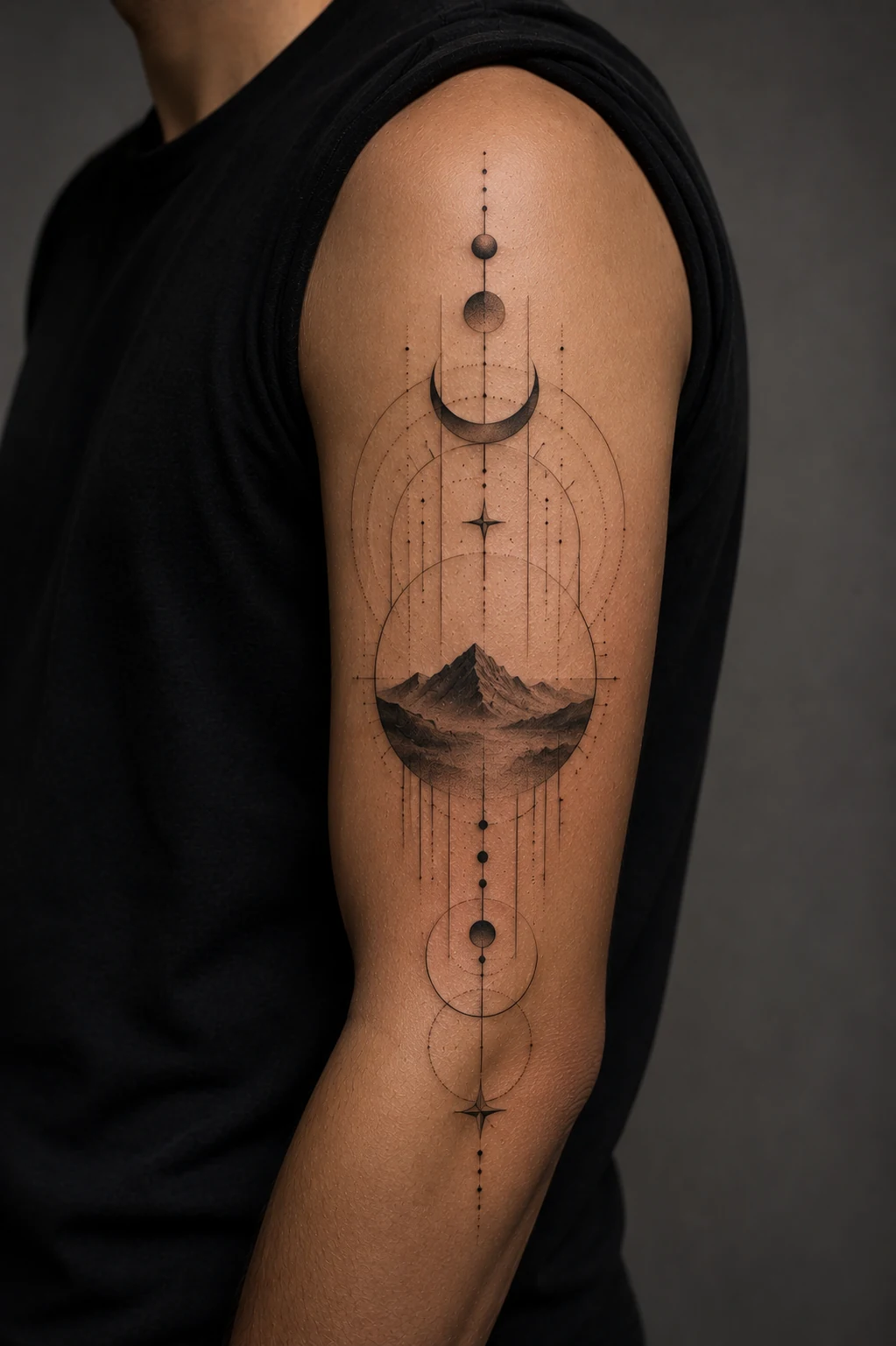
A restrained mountain fragment sits within a fine geometric veil of circles, crescents, and precise lines.
Monolith No. 04
- Artist
- Niko Vale
- Discipline
- Blackwork
- Placement
- Upper arm
- Scale
- Large
- Session profile
- Planned across sessions
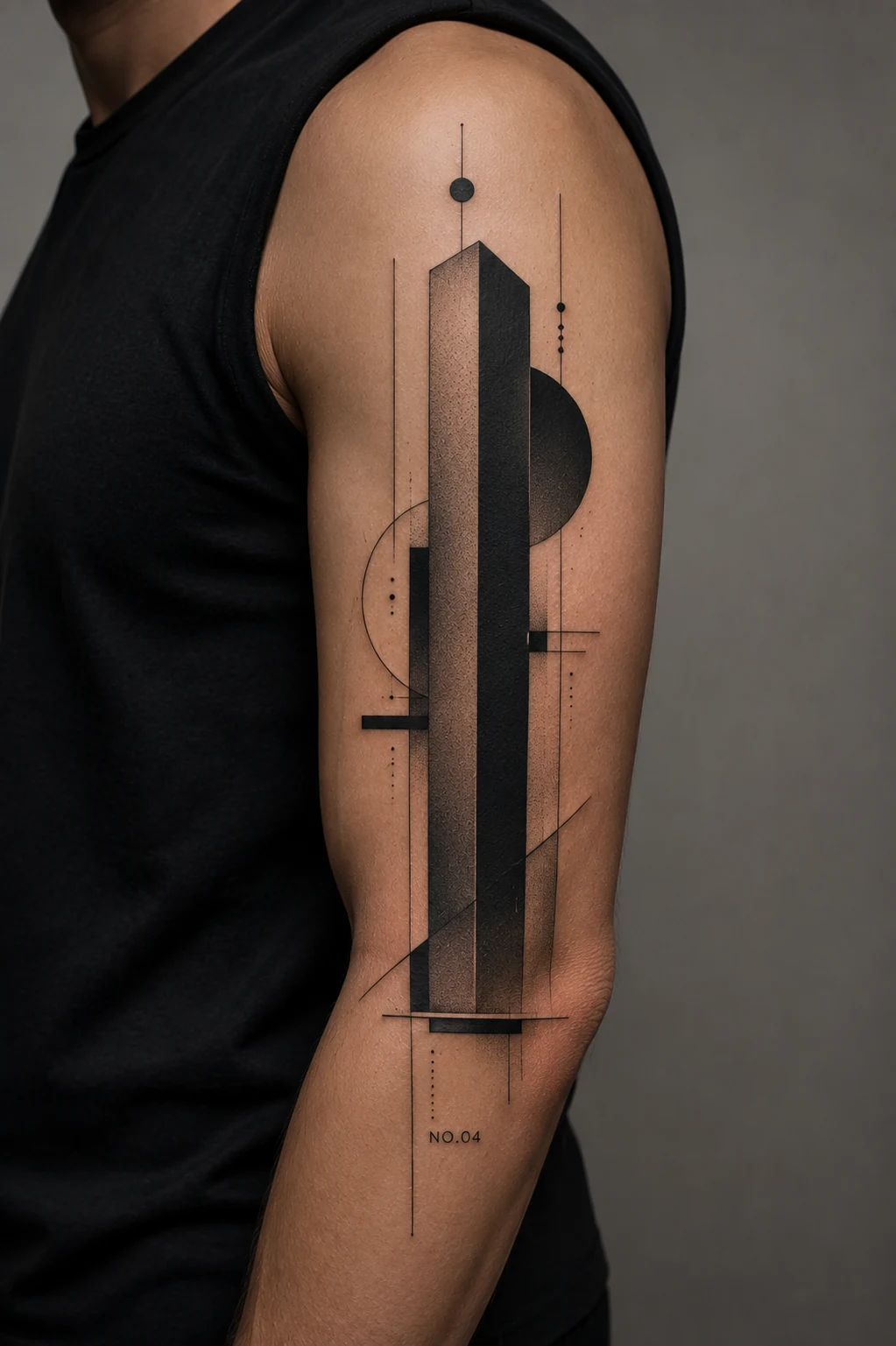
A vertical architectural blackwork study balances a dominant mass with circles, thin axes, and a small NO.04 notation.
Quiet Architecture
- Artist
- Niko Vale
- Discipline
- Blackwork
- Placement
- Upper arm
- Scale
- Large
- Session profile
- Planned across sessions
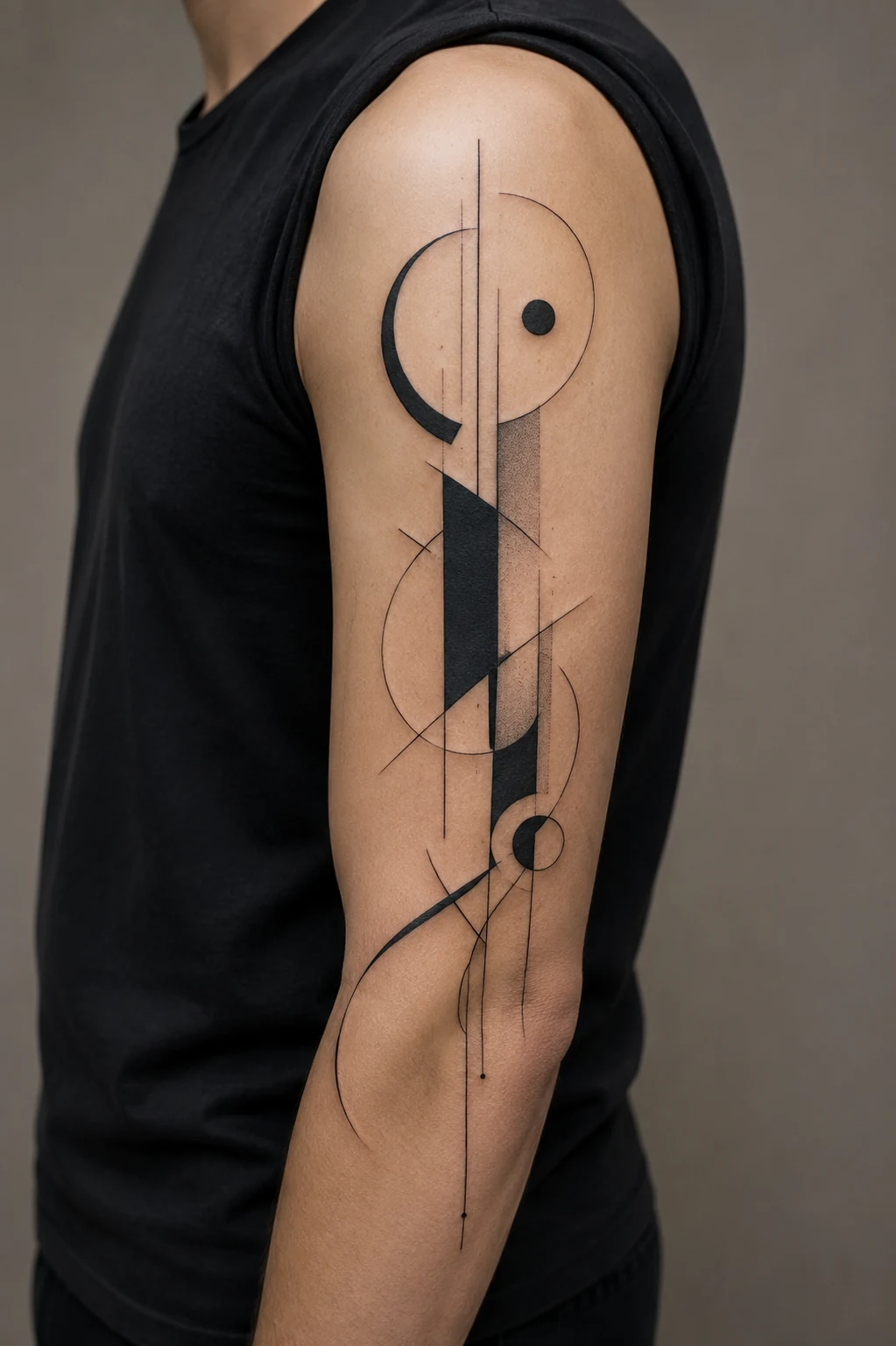
Geometric blackwork balances circles, black planes, and uninked skin along the outer upper arm.